 Receptnaptár
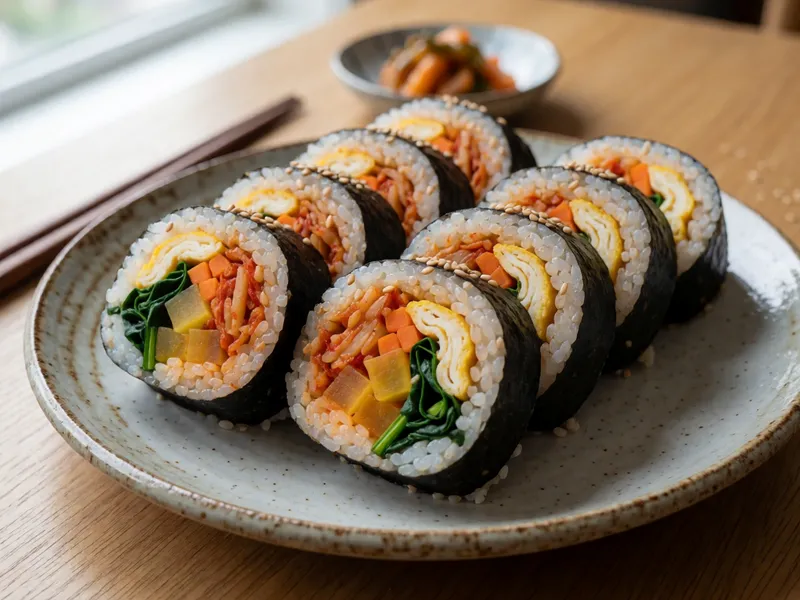
Kimchi-gimbap (Korean fried kimchi gimbap)
Kimchi-gimbap is Korean fried kimchi gimbap: a seaweed roll with rice, sour, fried kimchi, meat or tuna and vegetables. One of the popular gimbap types, combining the sour-spicy flavour of kimchi with rice and seaweed. Filling, flavourful and tasty cold.
 Open in Receptnaptár — serving calculator, cook mode, save
Ingredients
Method
Tap a step once you've finished it.
- Season the rice with sesame oil and salt and let it cool slightly.
- Squeeze the kimchi so there is less liquid and chop finely.
- Heat the oil in a pan, sauté the pork for 3-4 minutes, then add the kimchi and sugar and sauté for another 3-4 minutes until the moisture evaporates; let cool.
- Lay a seaweed sheet on a bamboo mat, spread a thin layer of rice on it and line up the kimchi mixture, egg and cucumber in the middle.
- Roll up tightly, seal the end with a little water and brush the roll with sesame oil.
- Cut with a sharp, wet knife into 2 cm slices and serve sprinkled with sesame seeds.
A Receptnaptár original recipe. Calories and protein are estimated.
Tips
- Drain the kimchi well so the rice does not turn soggy.
- Fry the kimchi so its sourness softens.
- Roll tightly so it does not fall apart.
- Wet the knife before every cut.
Frequently asked questions
What is the difference between gimbap and sushi?
Gimbap rice is seasoned with sesame oil, without vinegar, and often filled with fried egg.
What can go in place of the pork in kimchi-gimbap?
Tuna works too, and for a vegetarian version use finely chopped, pan-fried tofu or extra egg. Fry it with the kimchi for 3–4 minutes until the moisture evaporates; vegetarians should look for fish-free kimchi, since kimchi often contains fish sauce.
Similar recipes
- Kolozsvár-style layered cabbage · Hungarian
- Kimchi-udon (Korean stir-fried kimchi udon noodles) · Korean
- Dubu-kimchi (Korean boiled tofu with stir-fried kimchi and pork) · Korean
- Bibim-guksu (Korean spicy-sour cold wheat noodles) · Korean
- Layered cabbage and rice bake · Hungarian
- Kimchi bokkeumbap (kimchi fried rice) · Korean
More korean ideas
- Bibimbap
- Japchae (glass noodles with vegetables)
- Gimbap (filled seaweed rice rolls)
- Bibim naengmyeon (cold spicy buckwheat noodles)
- Kongguksu (cold soy milk noodle soup)
- Dubu-jorim (fried tofu in soy sauce)
- Jangjorim (shredded beef braised in soy sauce)
How to use it · Privacy · Legal notice · Editorial principles · About us · Cookie settings