 Receptnaptár
Gim-mari (Korean fried seaweed rolls with glass noodles)
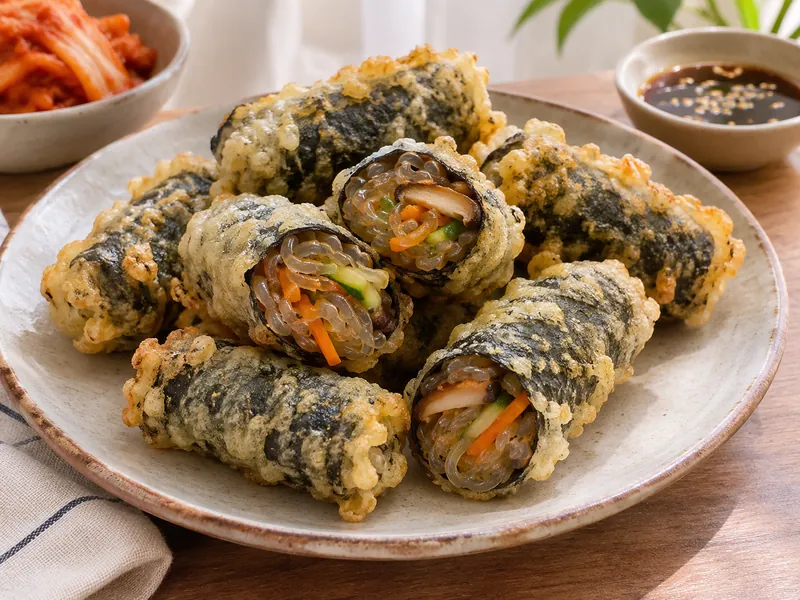
Gim-mari is the Korean seaweed roll, filled with glass noodles (japchae-style filling) and vegetables, and fried. The roll is crisp outside, sticky inside, sweet-savoury. A companion of Korean street food, especially the tteokbokki dish. Liked as a cold or hot bite.
 Open in Receptnaptár — serving calculator, cook mode, save
Ingredients
Method
Tap a step once you've finished it.
- Cook the glass noodles in boiling water for 6-7 minutes, drain and rinse in cold water; cut shorter with scissors.
- Fry the vegetables separately in a little oil for 2-3 minutes, seasoned with salt.
- Mix the noodles with soy sauce, sugar, sesame oil and garlic and fry in the pan for 2-3 minutes.
- Lay out a sheet of nori, spread the noodles evenly over it, arrange the vegetables in a row and roll up tightly; seal the end with egg.
- Fry the rolls in a little oil, turning, for 2-3 minutes on each side until golden brown.
- After cooling cut into 2 cm rounds, sprinkle with sesame seeds and serve with a dip.
A Receptnaptár original recipe. Calories and protein are estimated.
Tips
- Do not wet the nori sheet so it stays crisp.
- Drain the noodles well so the roll does not go soggy.
- The egg is the glue, do not leave it out.
- It is served with chilli soy sauce or mustard as a dip.
Frequently asked questions
How does it differ from gimbap?
The filling of gim-mari has no rice, glass noodles are the main ingredient; and it is fried.
When and how should I slice the fried gim-mari so it does not come apart?
Let the fried rolls cool, then cut them into 2 cm rounds with a sharp knife without sawing; a hot roll is still soft and the slices get pushed apart. Keep the egg-sealed seam on the bottom while cutting so it holds the round together.
🌱 Vegetarian and vegan recipes: more recipes like this
Similar recipes
- Dak-kalguksu (Korean chicken knife-cut noodle soup) · Korean
- Gim-gui (Korean sesame-oil roasted seaweed sheets) · Korean
- Miyeok-guk (Korean seaweed soup with beef) · Korean
- Cold sesame noodle salad with coriander · Chinese
- Miyeok-muchim (Korean tangy seaweed salad) · Korean
- Scallion oil noodles · Chinese
More korean ideas
- Bulgogi-jeongol (Korean beef hotpot with vegetables and noodles)
- Japchae (glass noodles with vegetables)
- Bibim naengmyeon (cold spicy buckwheat noodles)
- Jjimdak (Korean soy-braised chicken with glass noodles)
- Makguksu (Korean cold buckwheat noodles with kimchi and sauce)
- Jjolmyeon (Korean chewy cold noodles with spicy-sour sauce)
- Mul-naengmyeon (Korean cold noodles in icy beef broth)
- Bibim-guksu (Korean spicy-sour cold wheat noodles)
How to use it · Privacy · Legal notice · Editorial principles · About us · Cookie settings