 Receptnaptár
Forfar bridie (Scottish meat turnover)
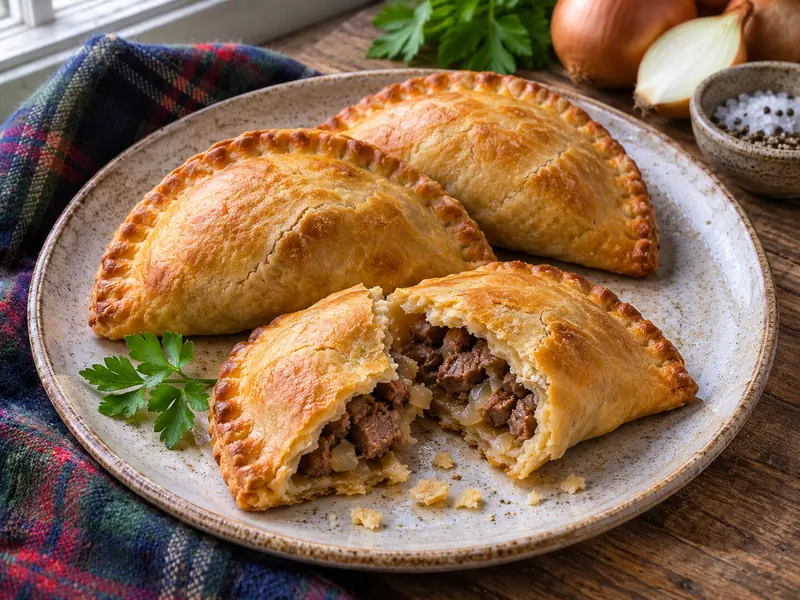
The Forfar bridie is a crescent-shaped meat turnover from the Scottish town of Forfar: beef, onion and fat, baked in shortcrust or puff pastry. By tradition it got its name from a pie served at a wedding celebration. It is served for lunch, on outings, hot or cold.
 Open in Receptnaptár — serving calculator, cook mode, save
Ingredients
Method
Tap a step once you've finished it.
- Mix the diced beef, onion and fat in a bowl and season with Worcestershire sauce, salt and pepper.
- Heat the oven to 200 C (180 C fan); roll the pastry out on a floured surface to 3 mm thin and cut 4 rounds about 18 cm across.
- Pile half of the filling onto one half of each round, brush the edge with egg, fold the other half over and press the edge together firmly with a fork.
- Cut a small hole in the top for steam and brush with egg.
- Bake on a tray lined with baking paper for 20 minutes at 200 C, then reduce to 160 C and bake another 30-35 minutes until golden brown and the meat is cooked through.
- Serve hot, with boiled vegetables, brown gravy or peas.
A Receptnaptár original recipe. Calories and protein are estimated.
Tips
- Chop the meat finely so the filling is soft and juicy.
- Seal the casing tightly so the juices do not run out.
- The hole on top is for steam, so it does not burst.
- It is good cold too, excellent as a packed lunch.
Frequently asked questions
How does it differ from the Cornish pasty?
The Forfar bridie contains raw beef and onion without potato; the Cornish pasty also has potato and swede.
Why does the meat go into the bridie raw instead of being cooked first?
The beef is cut small and mixed with onion and fat, so inside the sealed pastry it tenderises in its own steam and juices. The fat (suet or butter) keeps it juicy. That is why the bridie needs 20 minutes at 200 degrees, then 30-35 minutes at 160.
Similar recipes
- Beef Wellington · Hungarian
- Cornish pasty (filled pastry parcel with potato and beef) · British
- Butter palmiers (palm leaves) · French
- South African meat pie (minced beef pie) · African
- Sigara böreği (cheese rolls from yufka pastry) · Middle East & Caucasus
- Onion gravy (English onion gravy for roasts and sausages) · British
More british ideas
- Scotch egg (boiled egg wrapped in sausage meat and breaded)
- Ploughman's lunch (cold British platter with cheese and pâté)
- Scotch broth (Scottish barley, lamb and vegetable soup)
- Cock-a-leekie (Scottish chicken and leek soup with prunes)
- Cullen skink (Scottish smoked haddock and potato chowder)
- Leek and potato soup (English leek and potato)
- Pea and ham soup (English split pea and ham soup)
How to use it · Privacy · Legal notice · Editorial principles · About us · Cookie settings