 Receptnaptár
Székely goulash (székelykáposzta)
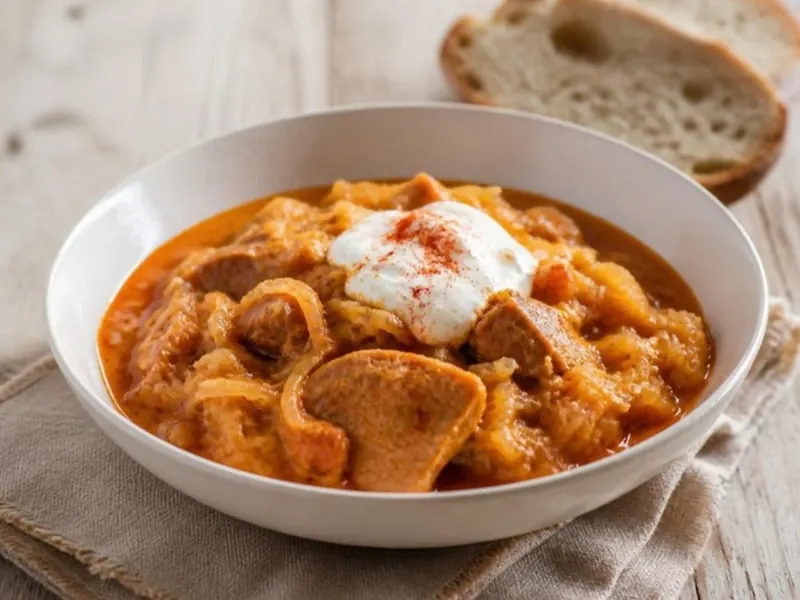
Székely goulash (székelykáposzta) is where pork stew meets sauerkraut — the key is balance, so neither the meat nor the cabbage overpowers the other.
 Open in Receptnaptár — serving calculator, cook mode, save
Ingredients
Method
Tap a step once you've finished it.
- Heat the lard in a large pan over medium heat, add the chopped onion and fry for 5 minutes until translucent.
- Take off the heat, stir in the paprika, then return to the heat and immediately add the cubed meat.
- Brown the meat in the paprika onion for 5-6 minutes until it starts to turn white on all sides.
- Add the crushed garlic and caraway, season with salt and pepper, then pour in enough water to cover.
- Braise covered over low heat for 1-1.5 hours until the meat is almost completely tender.
- If the sauerkraut is very sour or salty, rinse it in a colander with cold water, and loosen it if it's clumped.
- Add the sauerkraut to the tender meat, stir, and add a little more water if needed so it doesn't catch.
- Braise covered for another 30-35 minutes until the cabbage is tender too and the flavours have blended.
- Mix the sour cream with the flour until smooth, temper it with a ladleful of the hot sauce, then stir it back into the dish.
- Boil for another 3-4 minutes until the sauce thickens, then serve hot, topped with sour cream.
A Receptnaptár original recipe. Calories and protein are estimated.
Tips
- If the sauerkraut is very strong or salty, rinse it in cold water before adding it to the meat, or the whole dish will turn out too sour.
- Braise the meat separately until almost tender before adding the cabbage — if you cook both together from the start, the cabbage turns to mush before the meat softens.
- Use whole caraway seeds, not ground — they release their flavour during cooking without turning bitter.
- Stir in the sour cream mixture only at the end, over low heat, and don't let it boil for long, or the sour cream can curdle.
Frequently asked questions
What's the difference between székelykáposzta and rakott káposzta?
Székelykáposzta is cooked in one pot, stew-style, from meat and sauerkraut; rakott káposzta is a layered, oven-baked dish with rice and stuffing.
What's it traditionally served with?
On its own, with a spoonful of sour cream and fresh bread — no side dish needed, as the cabbage itself acts as one.
Similar recipes
- Székely-style pork and sauerkraut stew · Hungarian
- Svinsko s kiselo zele (Bulgarian pork with sauerkraut) · South Slavic
- Stuffed cabbage with sour cream roux · Hungarian
- Szegediner Gulasch (sauerkraut goulash with sour cream) · German
- Kolozsvár-style layered cabbage · Hungarian
- Kolozsvár Cabbage in Puff Pastry · Hungarian
More hungarian ideas
- Goulash soup (gulyásleves)
- Chicken paprikash with nokedli dumplings
- Hungarian stuffed cabbage (töltött káposzta)
- Szeged-style fisherman's soup (halászlé)
- Bean soup with smoked ham hock
- Beef in creamy vadas sauce with tarhonya
- Breaded pork cutlet with mashed potatoes and cucumber salad
- Consommé (clear beef broth)
How to use it · Privacy (in Hungarian) · Legal notice (in Hungarian) · Editorial principles (in Hungarian) · Cookie settings