 Receptnaptár
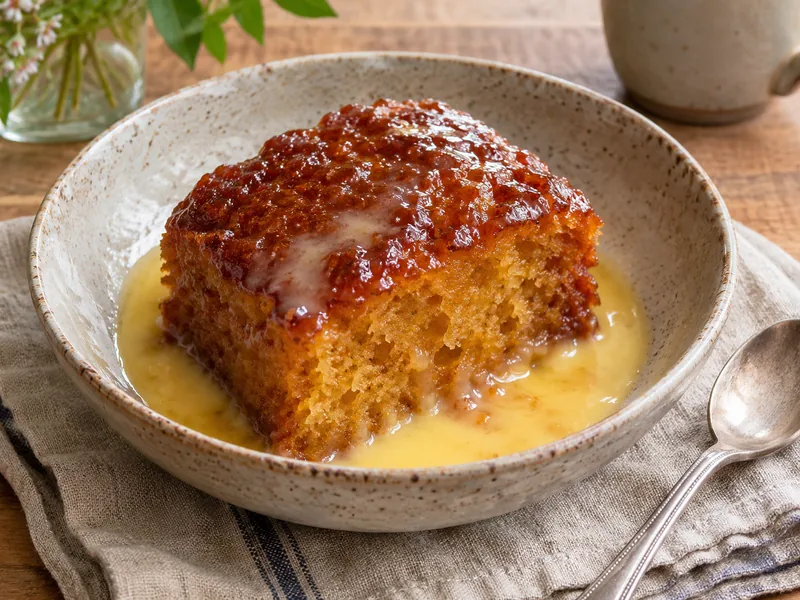
Malva pudding (South African warm apricot sponge with butter and cream sauce)
Malva pudding is South Africa's favourite warm dessert, a fixture of Sunday lunches and restaurant menus. Of Dutch origin, it is a caramel-flavoured sponge made with apricot jam and soaked after baking in a butter and cream sauce, which makes it spongy and moist. It is served with custard or ice cream.
 Open in Receptnaptár — serving calculator, cook mode, save
Ingredients
Method
Tap a step once you've finished it.
- Heat the oven to 180 °C (160 °C fan) and butter an ovenproof dish of about 20×25 cm.
- Beat the sugar and eggs for 3-4 minutes until pale and thick, then mix in the apricot jam.
- Melt the butter and add the vinegar and milk. Mix the flour with the bicarbonate of soda and salt.
- Fold the flour and milk mixtures alternately, in several additions, into the egg foam until you have a smooth, runny batter; pour it into the dish.
- Bake for 30-35 minutes, until dark golden brown and a skewer comes out clean.
- Meanwhile heat the sauce ingredients in a pan until the butter and sugar have melted. Prick the hot pudding all over with a fork and slowly pour over the hot sauce; leave to soak in for 10 minutes and serve warm.
A Receptnaptár original recipe. Calories and protein are estimated.
Tips
- Pour the sauce over the pudding hot from the oven, or it will not soak in evenly.
- Vinegar and bicarbonate together give the typical open, spongy crumb: leave neither out.
- Half of the cream in the sauce can be replaced with milk for a lighter result.
- It can be baked the day before; reheat covered at 150 °C for 15 minutes before serving.
Frequently asked questions
Why is it called malva pudding?
The origin is disputed: some link it to malvasia wine, others to malva, the Afrikaans word for mallow; neither is in the recipe.
How do you prick and soak malva pudding so the syrup reaches every part?
Prick the still-hot cake all over with a fork, then pour the hot syrup over slowly, in two or three portions. Leave it for 10 minutes to absorb, so the inside becomes moist and not only the top.
🌱 Vegetarian and vegan recipes: more recipes like this
Similar recipes
- Bienenstich (bee sting cake with almond-honey caramel and vanilla cream) · German
- Tres Leches Cake (Three-Milk Sponge Cake) · Mexican
- Prague cake (chocolate cream) · Russian
- Eve's pudding (apple sponge pudding) · British
- Pan de Muerto (Day of the Dead Sweet Bread) · Mexican
- Rosca de Reyes (Three Kings' Bread with Candied Fruit) · Mexican
More african ideas
- Kashata (East African coconut and peanut brittle bars)
- Kenyan chai (spiced milk tea)
- Ginger drink (West African spicy ginger lemonade)
- Rooibos iced tea (South African red tea with lemon and mint)
- Chapman (Nigerian non-alcoholic cocktail)
- Chin chin (Nigerian crunchy fried dough cubes)
- Kaimati (Zanzibari cardamom and coconut dough balls)
- M'hancha (Moroccan snake cake with almond filling)
How to use it · Privacy · Legal notice · Editorial principles · About us · Cookie settings