 Receptnaptár
Quince jelly
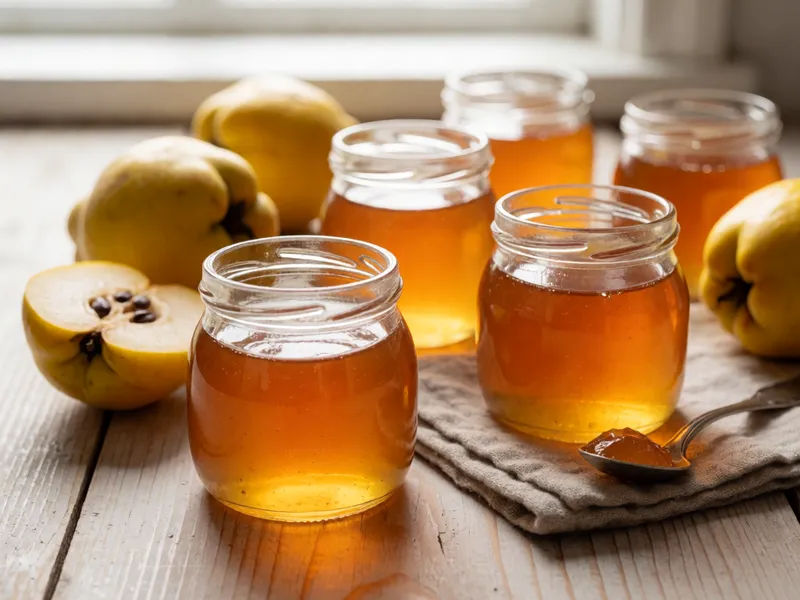
Quince jelly is the glistening ruby-coloured speciality of the autumn pantry: clear, fragrant and set by the fruit's natural pectin. It is excellent with cheese, roast meats and toast. Patient draining makes it translucent, so it looks like a jewel in the jar.
 Open in Receptnaptár — serving calculator, cook mode, save
Ingredients
Method
Tap a step once you've finished it.
- Wash the quinces and rub off the fuzz, cut them into quarters (with skin and cores) and just cover with water in a pan. Cook covered for 40-45 minutes until completely soft.
- Tip the cooked fruit into a muslin bag or a sieve lined with muslin and let it drip into a bowl overnight. Don't press it or the jelly will be cloudy.
- The next day, measure the juice. For every 1 litre of juice add about 700 g sugar, and add the lemon juice.
- Boil over high heat for 15-25 minutes, stirring, skimming the foam, until it thickens.
- Cold plate test: drop a spoonful onto a cold plate; if it wrinkles when you push it with a finger as it cools, it is ready.
- Pour hot into sterilised jars, seal tightly and turn upside down for 10 minutes. It keeps for 1 year in a cool, dark place.
Based on: Malatinszky Fanny szakácskönyve (a classic Hungarian cookbook), modernised. Calories and protein are estimated.
Tips
- Don't press the fruit, so the jelly stays clear.
- The cold plate test reliably shows when it is ready.
- The quince cores contain a lot of pectin, so don't leave them out.
- Pour into the jars hot.
Frequently asked questions
Why won't it set?
It hasn't boiled long enough, or there isn't enough sugar. Boil it longer and repeat the test.
What do we serve it with?
Cheese, roast meats, toast.
Similar recipes
- Quince paste · Hungarian
- Cinnamon quince compote (Membrillos cocidos) · Spanish & Portuguese
- Quince preserve · Hungarian
- Béchamel soufflé · Hungarian
- Poured scones · Hungarian
- Lokum (Turkish delight with rose water) · Middle East & Caucasus
More hungarian ideas
- Savory soufflé
- Simple chocolate soufflé
- Ice pudding
- Coffee soufflé
- Coffee pudding
- Caramel pudding
- Moor in a shirt
- Punch pudding
How to use it · Privacy (in Hungarian) · Legal notice (in Hungarian) · Editorial principles (in Hungarian) · Cookie settings