 Receptnaptár
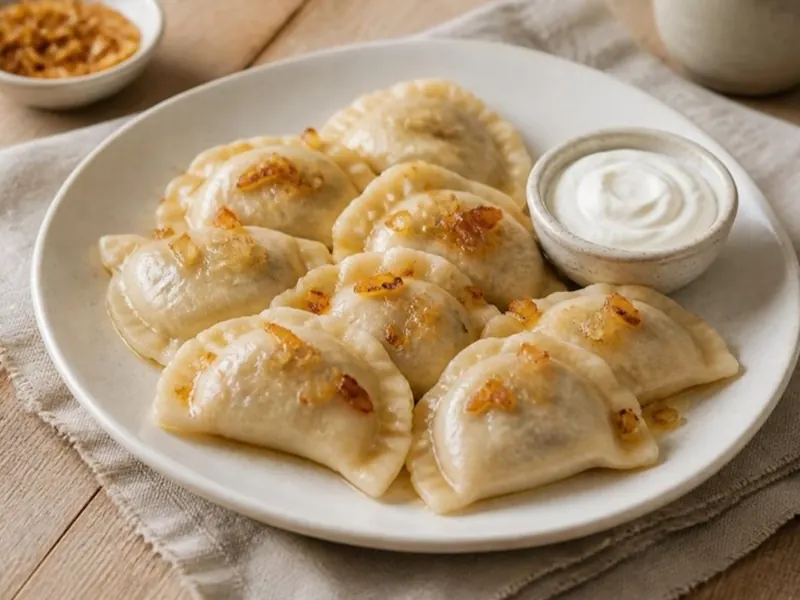
Meat pierogi with fried onions
Pierogi are the best-known dish in Polish cooking: a filling sealed in thin dough, boiled and topped with fried onions. This version uses cooked minced meat, which makes an excellent use of the meat left over from a pot of broth. They take some work, so it is worth making a large batch, as uncooked pierogi freeze well.
 Open in Receptnaptár — serving calculator, cook mode, save
Ingredients
Method
Tap a step once you've finished it.
- Knead the flour, salt, oil and lukewarm water into a smooth, elastic dough, then rest it for 20 minutes covered with cling film.
- Meanwhile, finely chop the onion and fry it in the lard until translucent.
- Mix the minced meat with the onion; if you're using raw mince, cook it through completely first.
- Season the filling with salt and pepper and leave to cool.
- Roll the dough out thinly on a floured surface and cut out circles with a glass or cutter.
- Put a small teaspoon of filling on each circle, fold in half and press the edges firmly together.
- Put the pierogi into plenty of boiling salted water, and once they rise to the surface cook for another 2-3 minutes.
- Meanwhile, fry the other two onions in butter or oil in a frying pan until golden.
- Serve the drained pierogi topped with the fried onions.
A Receptnaptár original recipe. Calories and protein are estimated.
Tips
- Make the dough with lukewarm water and let it rest for the full 20 minutes, because rested dough rolls out more easily and does not spring back.
- Press the edges together firmly and make sure no filling gets between them, otherwise the pierogi will open during cooking.
- Fry any leftovers in butter or lard until golden after boiling: with crisp edges they may be even better the next day than they were fresh.
Frequently asked questions
Can uncooked pierogi be frozen?
Yes. Freeze them on a tray, spaced apart, then transfer them to a bag, where they will keep for 2-3 months. Put them into the boiling water straight from frozen and allow 1-2 minutes extra.
What is the difference between pierogi and Hungarian derelye?
Both are filled, boiled pockets of dough, but Hungarian derelye are usually sweet and filled with jam, whereas pierogi also come with savoury fillings and count as a main course. The dough is also thinner and softer.
Similar recipes
- Cheese spaetzle with fried onions (Kasnocken) · Hungarian
- Curd cheese filled pasta triangles with buttered crumbs · Hungarian
- Sirloin steak with fried onions · Hungarian
- Thüringer Klöße (Thuringian raw potato dumplings with toasted bread cubes) · German
- Yangcong chao niurou (stir-fried beef with onions) · Chinese
- Lomo saltado (Peruvian stir-fried beef) · Spanish & Portuguese
More polish ideas
- Sour rye soup with sausage (żurek)
- Hunter's stew (bigos)
- Pierogi with potato and curd cheese filling
- Pearl barley soup with smoked meat (krupnik)
- Polish-style pork goulash
- Beef roulades with buckwheat (zrazy)
- Spiced tripe soup (flaki)
- Silesian dumplings with stew gravy and cucumber salad
How to use it · Privacy (in Hungarian) · Legal notice (in Hungarian) · Editorial principles (in Hungarian) · Cookie settings