 Receptnaptár
Whole roast goose
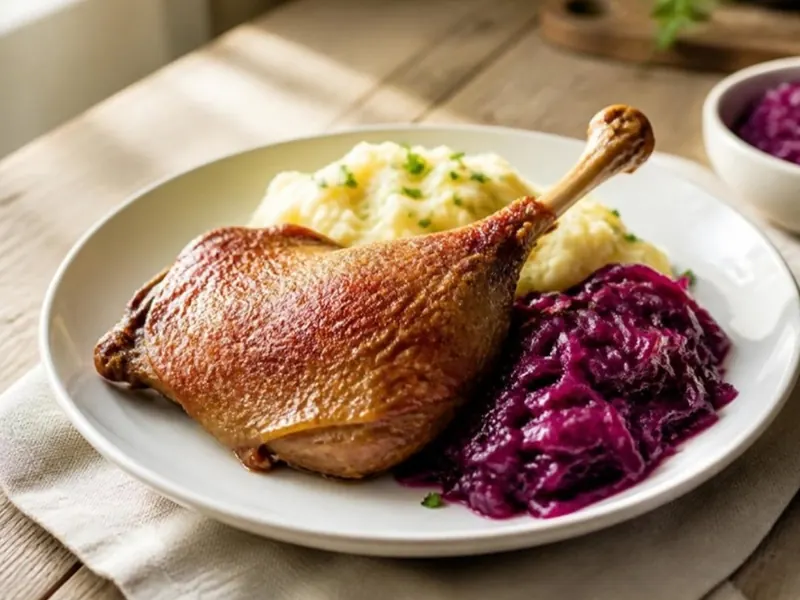
Whole roast goose is the festive dish of autumn and winter, a tradition at both St Martin's Day and Christmas. Though it is a big bird, roasting it takes little work: all it needs is salt, marjoram and plenty of time. The rendered fat is a treasure in its own right, while crisp skin and braised cabbage turn it into a true feast. It amply serves ten.
 Open in Receptnaptár — serving calculator, cook mode, save
Ingredients
Method
Tap a step once you've finished it.
- Clean the goose and wash it thoroughly inside and out.
- Salt it inside and out, ideally 1-2 hours before roasting.
- Preheat the oven to 170 °C.
- Put the goose in a roasting tin (breast side up), brush with lard and pour 200 ml of water underneath.
- If you like, put a few sprigs of marjoram inside.
- Roast for about 2-2.5 hours, basting every 20 minutes and pouring off the rendered fat now and then so it doesn't burn.
- If it takes a long time, cover it with foil for the last 30 minutes if needed so it doesn't dry out.
- Check with a meat thermometer at the thickest part of the thigh: the core temperature should reach 74 °C.
- For the last 15-20 minutes, roast uncovered at a higher temperature to crisp the skin.
- Rest for 15 minutes, carve, and serve with the boiled, strained fatty juices poured over.
Based on: A jó házikonyha (a classic Hungarian cookbook), modernised. Calories and protein are estimated.
Tips
- Prick the skin all over, but not the meat, so that the abundant fat can run out more easily and the skin turns crisp.
- Carefully pour off the rendered fat from the tin now and then, because in so much hot fat the underside of the goose boils rather than roasts, and the oven smokes more too.
- Goose breast cooks faster than the legs, so once the breast is done, cover it with foil and keep roasting for the sake of the legs.
Frequently asked questions
What should I do with the goose fat?
Strain it and keep it in a jar in the fridge. It is excellent for roasting potatoes, for braised cabbage or spread on bread, and it keeps for months.
What goes well with it?
Braised red cabbage or sauerkraut, mashed potatoes and baked apples are the classics. New wine suits it best at St Martin's Day, and a full-bodied red at Christmas.
Similar recipes
- Christmas roast goose with apples and prunes · Russian
- Gänsekeule mit Klößen (goose leg with potato dumplings and red cabbage) · German
- Gänsebraten mit Rotkohl und Klößen (roast goose with red cabbage and dumplings) · German
- Goose Giblets with Rice · Hungarian
- Goose Liver Pâté · Hungarian
- Beefsteak · Hungarian
More hungarian ideas
- Lecsó with sausage
- Hortobágy meat pancakes
- Layered potato bake (rakott krumpli)
- Creamy potato stew with frankfurters (krumplifőzelék)
- Creamy green bean stew with meat patties
- Fried breaded cheese with mashed potatoes and tartare sauce
- Pasta bake with ham and egg
- Cold supper platter with cold cuts and cheese
How to use it · Privacy (in Hungarian) · Legal notice (in Hungarian) · Editorial principles (in Hungarian) · Cookie settings