 Receptnaptár
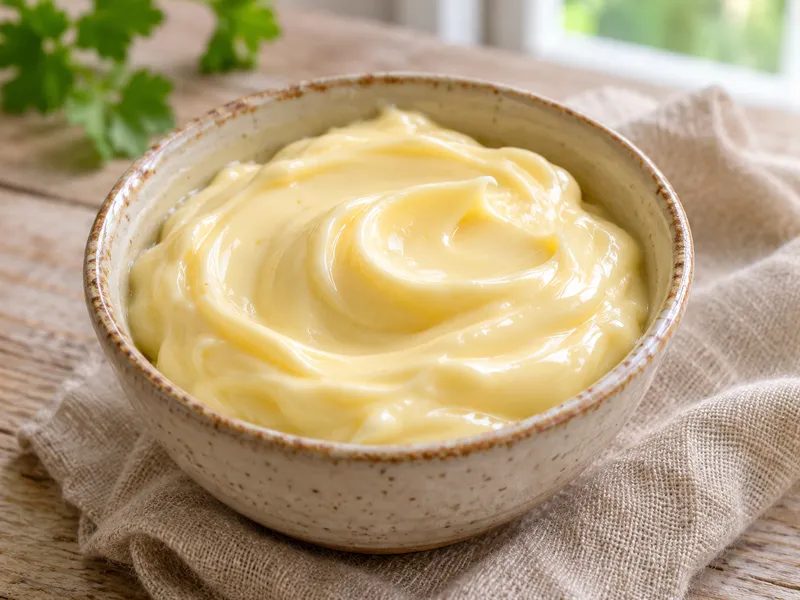
Sauce mayonnaise (homemade mayonnaise)
In Escoffier's 1903 cookbook, mayonnaise is the 'mother sauce' of cold sauces, from which most compound cold sauces derive. It is made from egg yolks and oil, which is why adding the oil is the key to success: it must be emulsified in slowly, with continuous whisking.
 Open in Receptnaptár — serving calculator, cook mode, save
Ingredients
Method
Tap a step once you've finished it.
- In a bowl, whisk the egg yolks with the mustard, salt, pepper and half of the lemon juice until smooth; put a damp cloth under the bowl so it does not slide.
- Add the oil to the yolks at first only drop by drop, whisking continuously.
- When the mixture starts to thicken and lighten, add the oil in a thin, steady stream, whisking all the time.
- If the mayonnaise is very thick, loosen it with a little lemon juice or vinegar.
- At the end whisk in the hot water, which stabilises the sauce.
- Season with salt and the remaining lemon juice and store in the fridge.
Based on: Auguste Escoffier: Le Guide culinaire (1903) (a classic French cookbook), modernised. Calories and protein are estimated.
Tips
- Ingredients should be at room temperature, or the mayonnaise binds with more difficulty.
- If it splits, slowly whisk the split mixture into a fresh yolk in a clean bowl.
- It contains raw egg, so make it only with fresh, intact eggs, keep it in the fridge and use within 2 days; it is not recommended for small children, pregnant women or the elderly.
Frequently asked questions
What do I use it for?
With cold meats, fish, egg mayonnaise, sandwiches, salads, or as a base for other sauces (tartare, rémoulade).
How long does it keep?
In the fridge, covered, for at most 2 days, as it contains raw egg.
🌱 Vegetarian and vegan recipes: more recipes like this
Similar recipes
- Sauce hollandaise (buttery, lemony Dutch sauce) · French
- Hollandaise Sauce · Hungarian
- Lemon soup · Hungarian
- Thickened broth with rice and lemon · Hungarian
- Mustard Sauce · Hungarian
- Homemade preserved lemons (Moroccan) · African
More french ideas
- Salade lyonnaise (frisée salad with bacon and poached egg)
- Salade de chèvre chaud (warm goat's cheese salad)
- Salade landaise (with duck breast and foie gras)
- Salade piémontaise (potato, ham and mayonnaise salad)
- Salade de lentilles au chèvre (lentil salad with goat's cheese)
- Salade de betteraves au chèvre (beetroot salad with goat's cheese)
- Salade d'endives aux noix et roquefort (chicory salad with walnuts and Roquefort)
- Salade de haricots verts à l'échalote (green bean salad with shallots)
How to use it · Privacy · Legal notice · Editorial principles · About us · Cookie settings